
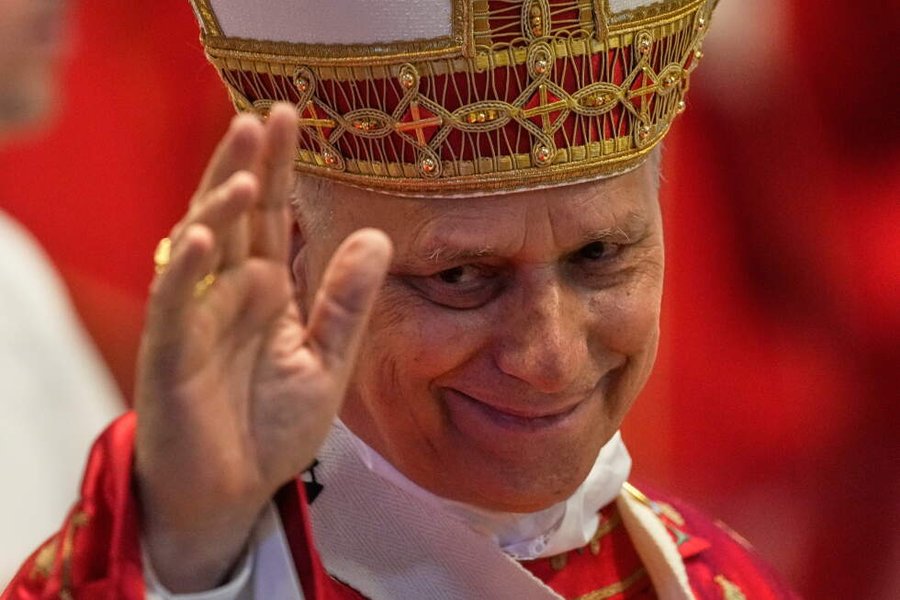
“Artificial Intelligence needs to be disarmed,” the Pope declared, delivering one of the Vatican’s strongest statements yet on the growing power of machines in modern life.
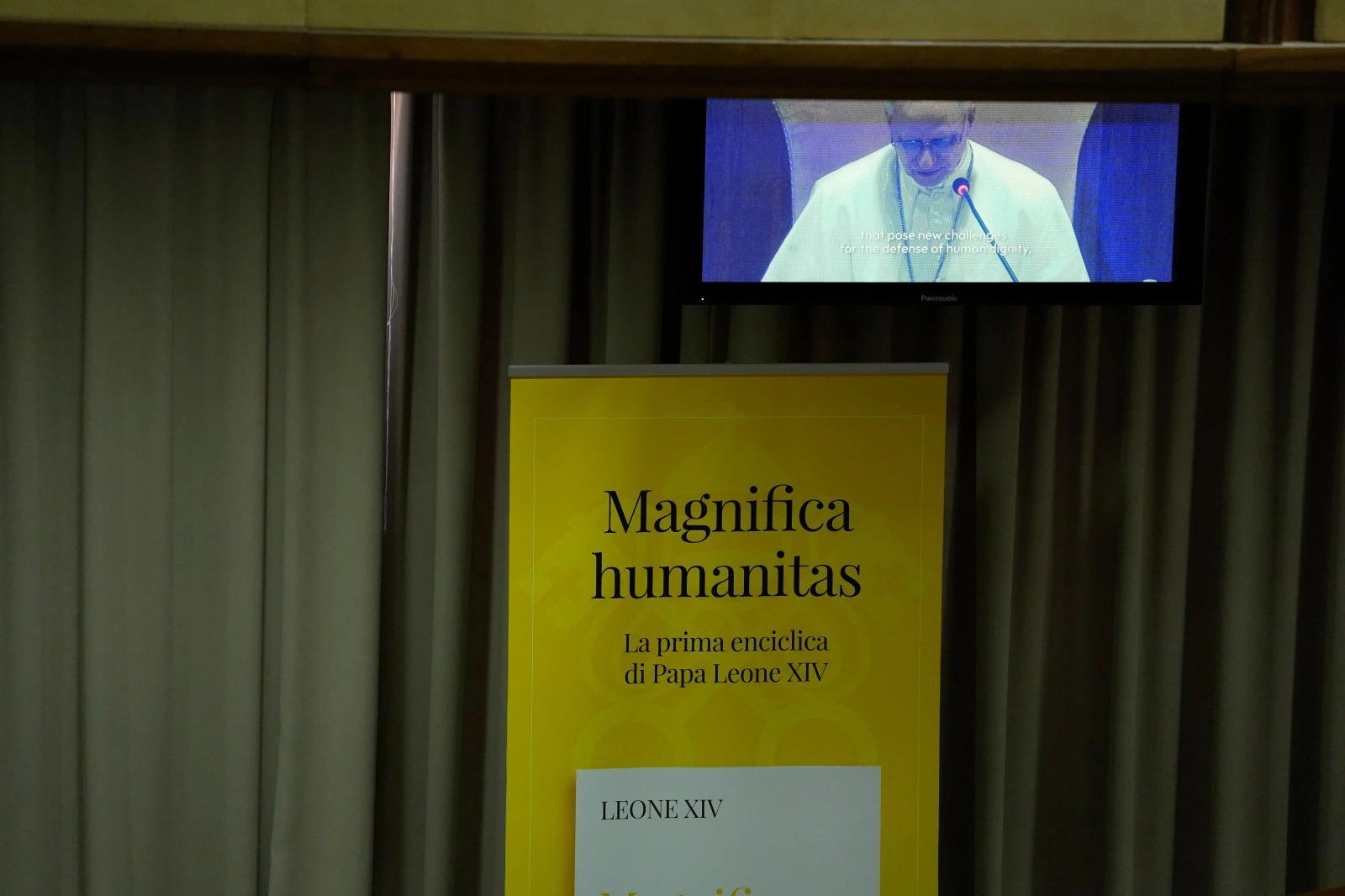
While technology companies race to build faster and smarter systems, Pope Leo XIV shifts the debate toward a deeper moral question: What happens to humanity when technology begins to shape everything?
The document argues that AI can heal, educate, and connect people, but it can also create a world where profit, efficiency, and control matter more than human life itself. In such a society, people risk becoming little more than data, consumers, or replaceable parts in a machine.
Far from sounding like an academic paper, Magnifica Humanitas reads as a moral warning to a world rushing toward automation without fully counting the human cost.
At the heart of the encyclical is a simple argument; technology is never neutral. AI can heal diseases, expand education, and connect people across continents. But it can also create a society where efficiency, profit, and control become the highest values — and where human beings are reduced to data points, consumers, or replaceable parts in a machine.
“The choice is ours,” the Pope writes.
To explain that choice, Magnifica Humanitas turns to two ancient biblical images: the Tower of Babel and the rebuilding of Jerusalem’s walls.
Babel represents a civilization drunk on power — one language, one system, one ambition. Humanity builds upward, convinced it can reach heaven through its own strength. But the result is collapse, confusion, and division.
Jerusalem offers the opposite vision. After destruction, the people rebuild slowly, together. Families repair small sections of the wall side by side. Priests, workers, merchants, and ordinary citizens all share responsibility. The goal is not domination, but community.
For Pope Leo XIV, AI could push humanity toward either future: a cold technological empire that crushes difference in the name of efficiency, or a society built around dignity, solidarity, and care for the vulnerable.
The document repeatedly returns to one central idea; human dignity cannot be measured by productivity. Every person, the Pope insists, possesses value simply by being human — not because of wealth, intelligence, or usefulness.
And this is where the Vatican draws a sharp line between humans and machines.
AI, the Pope argues, does not think or feel in the human sense. It has no body, no conscience, no moral responsibility. It can imitate empathy, but it cannot love. It can process information, but it cannot understand mercy.
“You cannot upload a soul,” the document declares.
That distinction becomes critical as AI systems move deeper into daily life. The encyclical warns against allowing algorithms to make life-and-death decisions in areas like warfare, criminal justice, or social control.
One of the document’s strongest sections focuses on what it calls the “death of truth.” In a world of deepfakes, manipulated videos, and AI-generated propaganda, the line between reality and fiction is becoming dangerously thin. Without a shared sense of truth, the Pope warns, democracy itself begins to collapse.
Another major concern is work. AI, the document says, risks replacing human labor not to liberate people, but to maximize profit. Workers are increasingly forced to adapt to the speed and logic of machines rather than the other way around.
The Pope calls on governments and businesses to prioritize fair wages, retraining, and human-centered economies instead of treating workers as expendable.
The encyclical also points to the hidden human cost behind modern technology. Smartphones, cloud systems, and AI tools often rely on exploited labor — from children mining cobalt in Africa to underpaid data workers in poorer nations training AI systems for pennies.
“We cannot enjoy the benefits of AI while ignoring the suffering that powers it,” the document says.
But perhaps the most dramatic moment comes in its discussion of war. With autonomous drones and AI-controlled weapons becoming more common, Pope Leo XIV argues that modern warfare has become dangerously detached from human conscience.
In a striking declaration, he calls the traditional “Just War” theory outdated in the age of autonomous weapons.
“Nothing is lost with peace; with war, everything can be lost.”
Yet despite its warnings, Magnifica Humanitas is ultimately a hopeful document. It ends with a call not for fear, but for responsibility.
Parents are urged to reclaim family life from screens. Citizens are encouraged to resist polarization and demand transparency from tech companies. Workers and entrepreneurs are challenged to build technologies that serve humanity instead of replacing it.
The Pope’s final message is both ancient and urgent: progress means little if humanity forgets what makes it human.

Comments (0)
No comments yet. Be the first!
Leave a Comment
Your comment will be reviewed before publishing.