

According to the Foundation, the 2026 funding will support 144 projects across 75 countries, reflecting a broad and deeply impactful reach. These initiatives focus on infrastructure, education, healthcare, and humanitarian aid, particularly in underserved and vulnerable communities. The projects are selected in collaboration with Vatican offices, ensuring alignment with the Church’s pastoral priorities and on-the-ground realities.
The scope of the funded projects highlights both diversity and urgency. Investments include the construction and renovation of Catholic schools, monasteries, orphanages, and medical clinics—critical institutions in regions where access to basic services remains limited. Beyond physical infrastructure, many initiatives aim to empower communities socially and economically.
For example, in Tanzania, a new dormitory will provide a safe living environment for girls at risk of early marriage, human trafficking, and abuse, while also encouraging boys to remain in school. In India, a dedicated school for marginalized tribal children will expand access to education for communities often excluded from mainstream systems. Meanwhile, in the Central African Republic, a library and technology center will promote digital literacy and learning opportunities in a region affected by instability.
Other notable efforts include professional IT training programs for vulnerable women in the Philippines, helping them gain skills for sustainable employment, and the construction of a well and water tower in Guinea to improve access to clean water—a fundamental yet often scarce resource in many parts of the world.
Ward Fitzgerald, President of the Foundation’s Board of Trustees, emphasized that these grants embody the organization’s core mission. He described them as tangible signs of hope, addressing immediate needs while strengthening the long-term resilience of Catholic communities. His remarks echo a broader trend within global philanthropy: a shift toward projects that combine humanitarian relief with sustainable development.
The grants were finalized following a rigorous review process led by the Foundation’s Grants Committee, chaired by Dr. Tammy Tenaglia of the Archdiocese of Philadelphia. Proposals submitted by Vatican entities in late 2025 were carefully evaluated for impact, feasibility, and alignment with mission priorities. The Board ultimately approved $12.5 million in immediate funding, with an additional $3 million to be distributed through affiliated initiatives before the end of 2026.
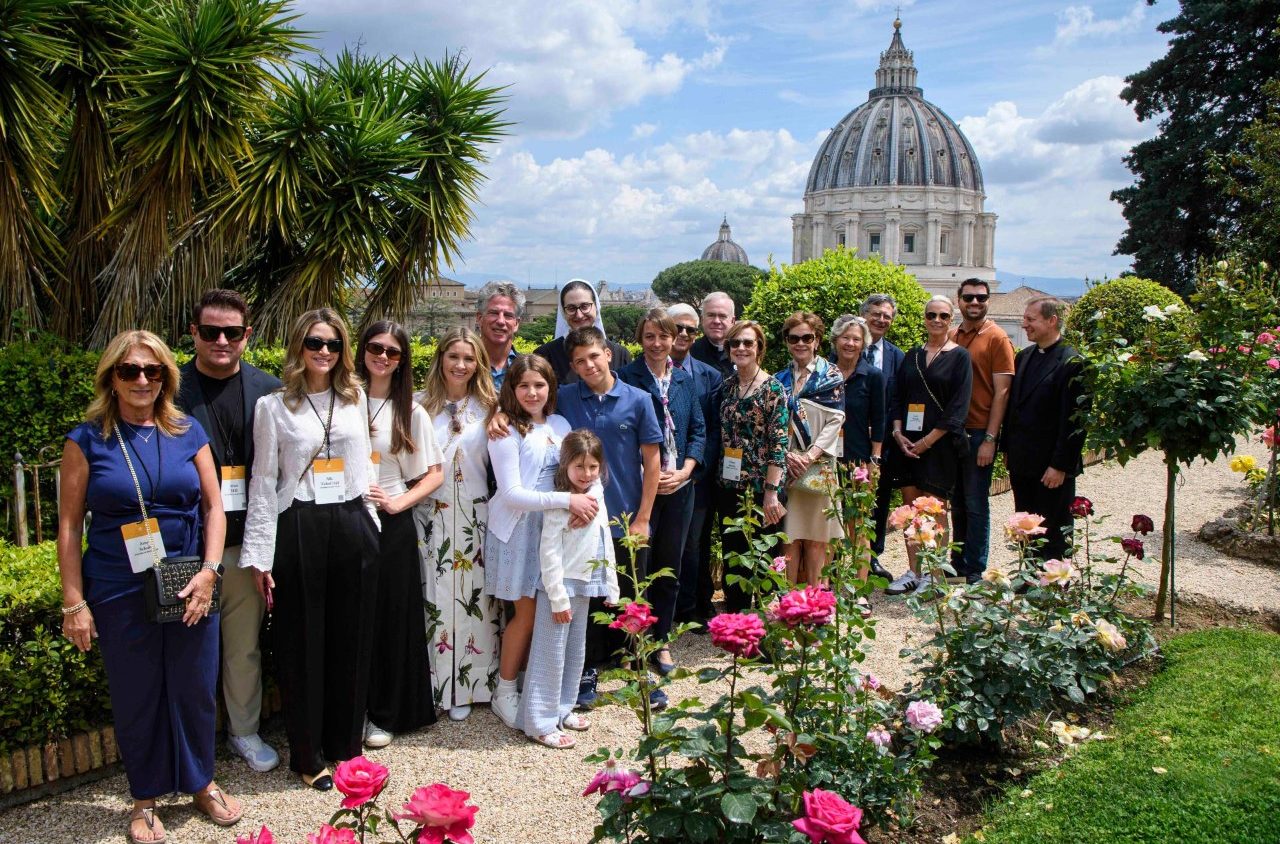
Beyond financial growth, the Foundation is also experiencing expansion in its donor base. Its “Stewards of Saint Peter”—a network of committed Catholic families supporting the Foundation’s work—has grown significantly, with 25 new families joining since the election of Pope Leo XIV. This increase reflects renewed enthusiasm and engagement within the global Catholic community.
The Foundation’s annual pilgrimage to Rome further strengthens this sense of shared mission. This year’s gathering, the first since Pope Leo XIV’s election, brought together 56 Steward families. Participants visited major ecclesiastical and historical sites, including St. Peter’s Basilica, the Lateran Palace, and the Pontifical University of St. Thomas Aquinas (Angelicum). The pilgrimage also featured a candlelight rosary at St. Mary Major and a private audience with the Pope—moments designed to deepen spiritual connection alongside philanthropic commitment.
Executive Director David Savage noted that this growth is not only numerical but also symbolic. It represents a collective dedication to service, generosity, and the practical expression of faith through action. In an era marked by global inequality, conflict, and displacement, such initiatives play a crucial role in delivering targeted assistance where it is most needed.
Since its founding in 1988, The Papal Foundation has distributed more than $270 million in grants, scholarships, and humanitarian aid, supporting over 2,700 projects worldwide. Its work has spanned multiple pontificates, including those of Pope Francis, Pope Benedict XVI, and Pope John Paul II, reflecting continuity in the Church’s commitment to charity and development.
As global challenges evolve, the Foundation’s record-setting 2026 grants signal both an expansion of resources and a reaffirmation of purpose: to serve those most in need while advancing the Church’s mission across the world.


Comments (0)
No comments yet. Be the first!
Leave a Comment
Your comment will be reviewed before publishing.