
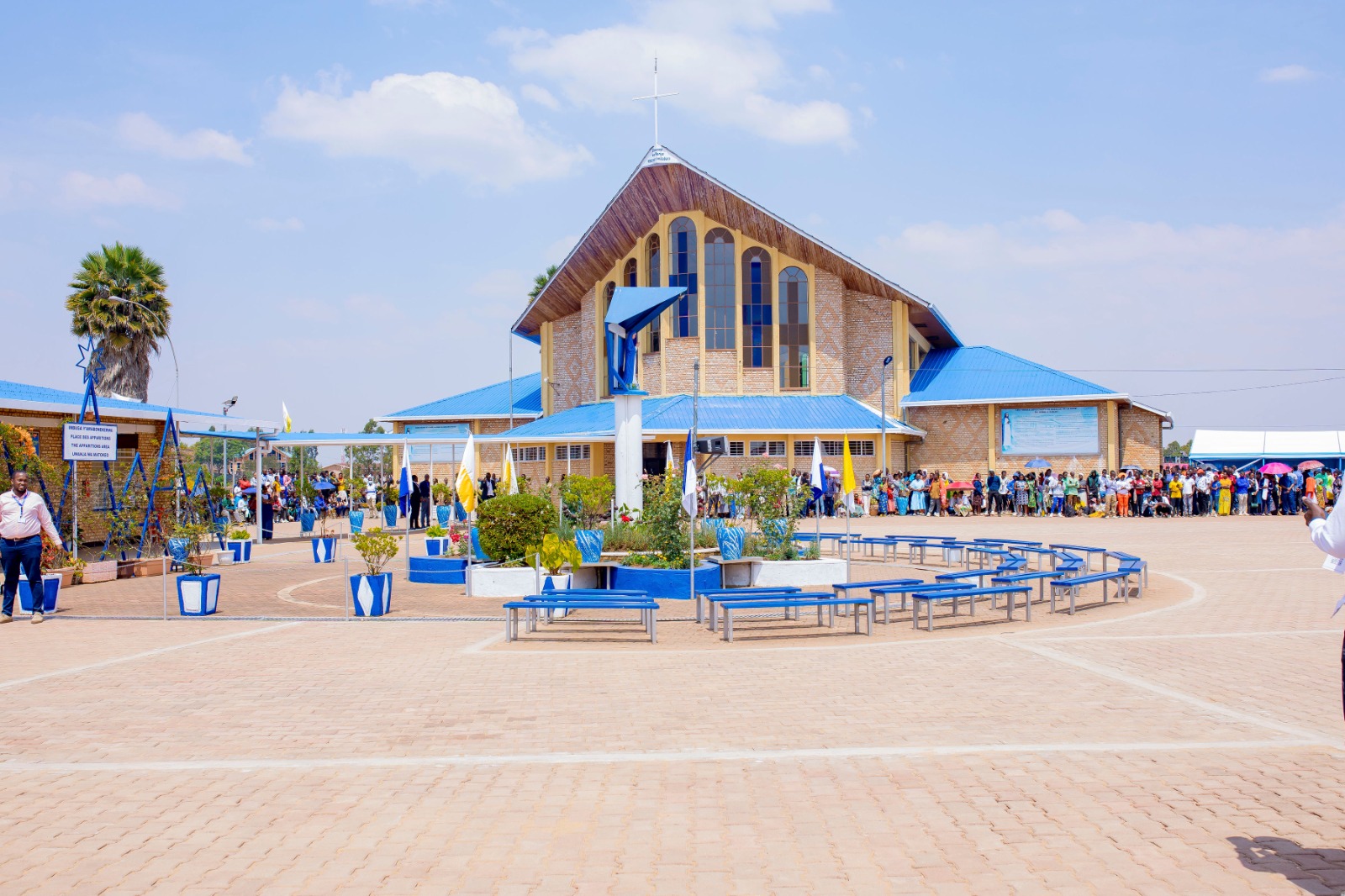

The Catholic Church later recognized the authenticity of the apparitions experienced by three schoolgirls — Alphonsine Mumureke, Nathalie Mukamazimpaka, and Marie-Claire Mukangango — and approved public devotion linked to Kibeho in 2001 under Bishop Augustin Misago.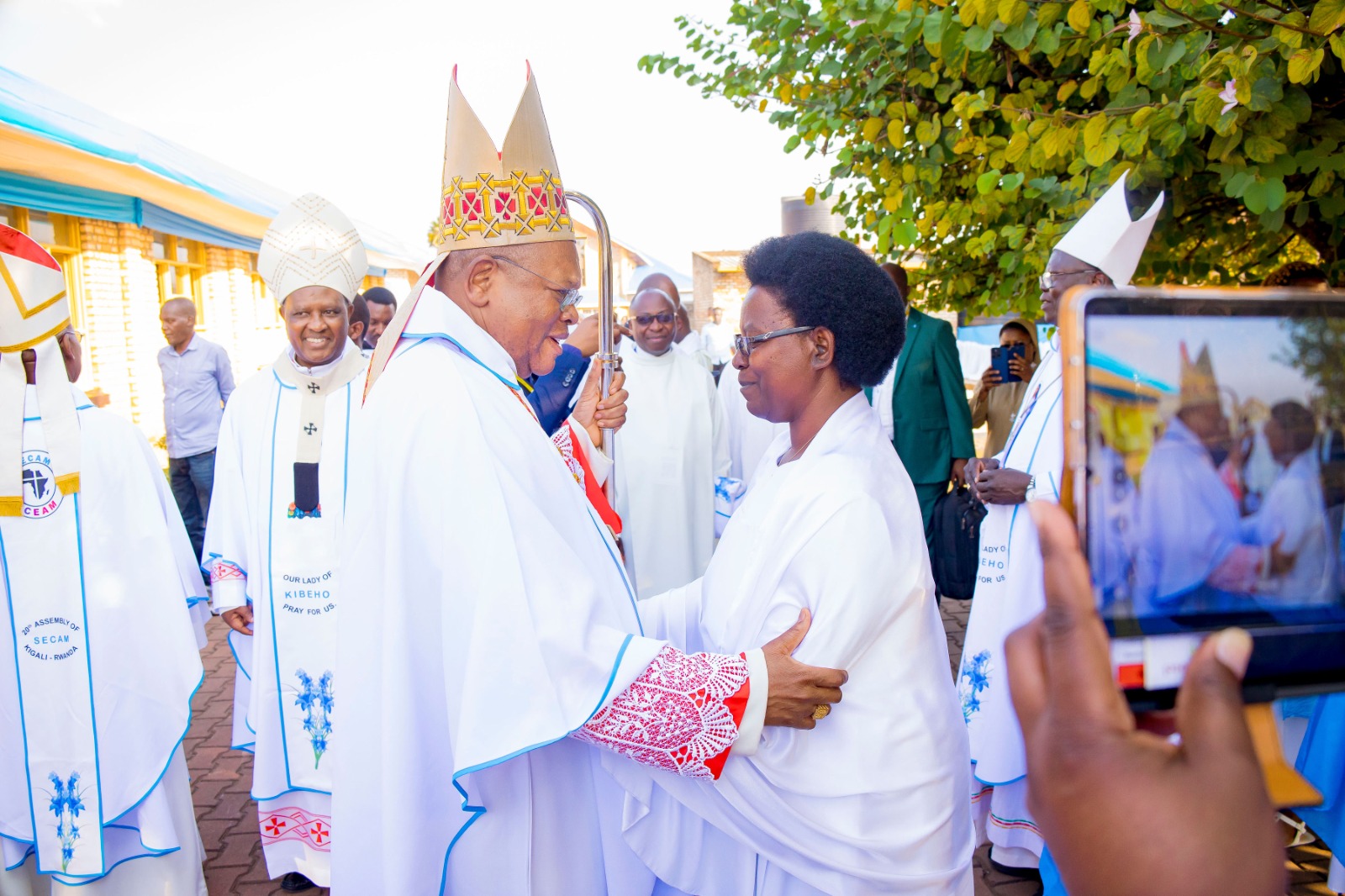
Nathalie Mukamazimpaka with Cardinal Ambongo back in 2025, when the African Catholic Bishops were in Rwanda for Symposium of Episcopal Conferences of Africa and Madagascar (SECAM)
What
keeps Kibeho central to theological and historical debate is not only its
spiritual message, but also a series of 1982 visions later widely reinterpreted
as foreshadowing the 1994 Genocide against the Tutsi and its aftermath.
According to official Church summaries and documented testimonies, the visionaries described intense experiences featuring rivers of blood, bodies left unburied, and scenes of mass violence.
These events reportedly occurred in a school setting, often in front of witnesses, with the girls entering states of ecstasy while describing what they saw.
After 1994, these descriptions were frequently reinterpreted through the lens of Rwanda’s national tragedy.
Across accounts, the core message attributed to the Kibeho apparitions emphasized repentance, prayer, and reconciliation. The visionaries consistently reported calls for conversion of heart, devotion to the Rosary, and moral renewal.
Some theological interpretations suggest the violent imagery should be understood as conditional warnings rather than fixed predictions, highlighting the consequences of hatred, division, and moral decline.
This interpretation gained prominence after the 1994 genocide against the Tutsi, when Rwanda experienced mass ethnic violence and national trauma.
Was the warning heard?
A key question in Kibeho discourse is whether its messages were sufficiently understood or acted upon.
Church documentation does not accuse political authorities of ignoring the apparitions, nor does it link state policy to the visions. The 2001 episcopal declaration focuses on spiritual authenticity rather than political interpretation.
However, in public discourse after the genocide, Kibeho has often been described as a “missed warning.” Some writers argue that its messages of reconciliation and its imagery of violence should have prompted stronger moral and social response.
Others caution against reading historical inevitability into religious experiences, noting that apparitions are spiritual events rather than political forecasts.
Interpretation of the visionaries’ experiences
All three visionaries are recognized in Church documentation as credible witnesses, though interpretations of their individual roles vary.
Marie-Claire Mukangango is often associated in later secondary writings with the devotion to the Seven Sorrows of Mary and more emotionally intense aspects of the apparitions. Some interpretations link her more closely to the vivid imagery of suffering reported in 1982, although official Church texts do not assign specific visionary content to individual girls.
This distinction is important: the Church validates the experience collectively, while much of the detailed symbolic interpretation developed later.
After 1994, understanding of Kibeho apparitions was significantly reshaped.
What was once a controversial apparition site became, for many believers, a symbol of prophetic warning. The imagery of blood and destruction was reinterpreted through the trauma of national history, creating a powerful narrative of warning unheeded.
However, this remains an interpretive framework rather than a doctrinal claim. The Church itself does not officially present the apparitions as a direct prediction of genocide, even while recognizing their authenticity.
Kibeho remains a rare intersection of spiritual experience, historical tragedy, and collective memory.
What remains uncontested is that Kibeho’s message continues to resonate far beyond the hills where it emerged, as a call for peace in a country that later endured unimaginable violence.
Note: This article draws on a combination of sources, including the 2001 Declaration on the Apparitions of Kibeho by Bishop Augustin Misago, official Catholic Church documentation from the Diocese of Gikongoro and Rwanda Catholic sources, EWTN Catholic News and Library archives, Immaculée Ilibagiza’s Our Lady of Kibeho: Mary Speaks to the World from the Heart of Africa as a secondary interpretive account, and post-1994 theological commentaries alongside journalistic analyses on how the Kibeho events have been historically interpreted.


Comments (0)
No comments yet. Be the first!
Leave a Comment
Your comment will be reviewed before publishing.