
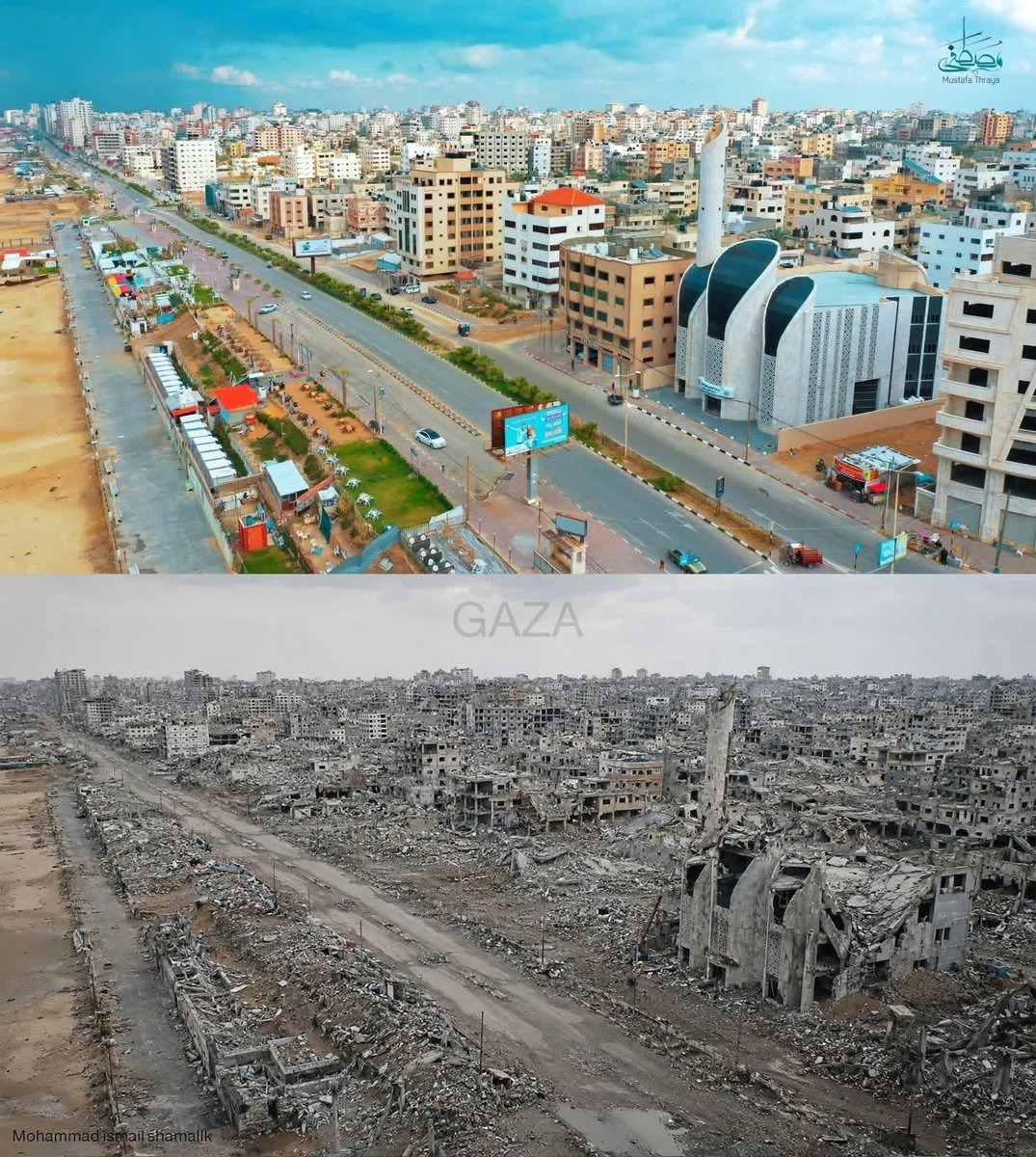

At first glance, Netanyahu’s position may appear to be driven purely by security concerns. But when viewed in the broader context of his political agenda and the positions of his coalition partners, the issue appears to go beyond Hamas’s weapons.
It is also a question of territory, political control and the future of a Palestinian state.
Greater Israel?
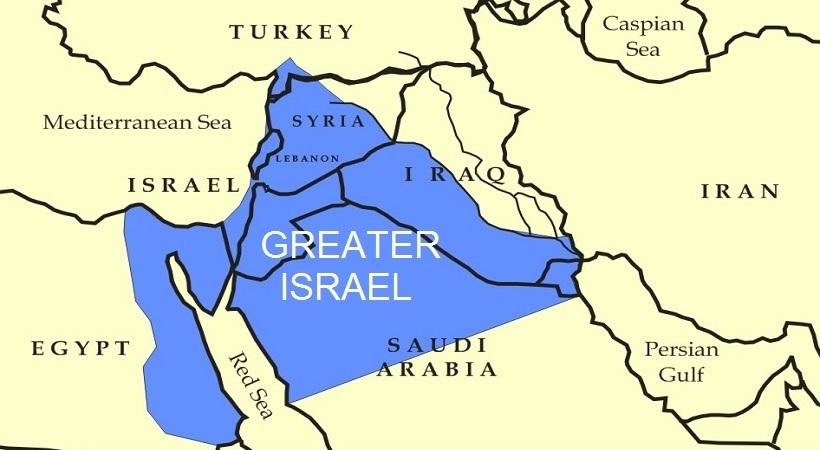
In August 2025, Netanyahu was asked whether he supported the vision commonly referred to as “Greater Israel.” He answered “absolutely,” and said he felt strongly connected to the vision.
The idea has been associated with ultranationalist elements within Israeli politics who advocate extending Israeli control over territories beyond the country’s internationally recognised borders, including Palestinian territories.
At the same time, influential members of Netanyahu’s government have continued to support the expansion of Israeli settlements in the West Bank, while some have openly opposed the establishment of an independent Palestinian state.
These positions have generated strong criticism from Arab and Muslim countries, which have viewed the rhetoric as a threat to regional stability and to Palestinian aspirations for self-determination.
It is within this broader context that Netanyahu’s refusal to withdraw from Gaza can be understood as a question that extends beyond Israel’s immediate security concerns.
Trump’s proposal seeks to link the disarmament of Hamas with a phased Israeli withdrawal from Gaza and the establishment of a new Palestinian administration.
From Washington’s perspective, such an arrangement could represent a step towards a political solution.
For Netanyahu, however, the sequence remains fundamentally different: Hamas must first be completely disarmed before Israel can agree to withdraw.
Netanyahu has stressed that he does not want Hamas to be “disarmed on paper.” He wants what he describes as genuine disarmament, including the removal of heavy and light weapons.
Netanyahu’s Political Dilemma
Netanyahu also faces a domestic political challenge.
Israel is preparing for parliamentary elections on 27 October 2026, a vote that is widely being viewed as an important test of Netanyahu’s leadership.
His coalition includes far-right politicians who have long opposed what they regard as concessions to the Palestinians. Some have also rejected the idea of an independent Palestinian state.
This creates political limits for Netanyahu. Even if a Gaza agreement is supported by Washington, accepting a deal that requires an Israeli withdrawal could expose him to serious pressure from his coalition partners and voters on the Israeli right.
For Netanyahu, therefore, the Gaza question is not simply about whether a peace proposal is acceptable to the United States. It is also about whether accepting that proposal could threaten the political coalition that keeps him in power.
Gaza and the Idea of Greater Israel
On one side is an ideological and political vision that favours maintaining or expanding Israeli control over disputed territories.
On the other is a diplomatic framework that calls for Israel to withdraw from Gaza, Palestinians to have a governing role, and a possible political process leading towards Palestinian statehood.
These two directions are difficult to reconcile.
That is why the Gaza crisis cannot be understood simply as a question of whether Hamas will surrender its weapons. The deeper question is what Israel wants Gaza to become after the war.
Will Gaza remain under some form of Israeli security control?
Will Palestinians regain political authority over the territory?
Or could Gaza become the starting point for negotiations leading towards a broader political settlement?
At present, there is no clear answer.
Trump wants his proposal to become a pathway towards ending the war and establishing a new governing structure in Gaza. Netanyahu, however, maintains that Hamas must first be genuinely and completely disarmed.
Hamas, meanwhile, has not accepted the idea that everything should begin with its disarmament. It has demanded that Israel first fulfil its own obligations, including implementing the agreed arrangements and allowing humanitarian assistance while withdrawing from positions it has occupied.
Each side is therefore waiting for the other to take the first significant step.
This is one reason why a proposal designed to end the war could instead become trapped in political disagreements.
The situation is further complicated by the way Israeli-Palestinian developments are framed by different media organisations.
Some Western media coverage tends to present Netanyahu’s position primarily through the lens of Israeli security and the threat posed by Hamas. Other regional and international media place greater emphasis on Israeli territorial ambitions, settlement expansion and Palestinian self-determination.
These different approaches matter because media framing can influence how audiences understand the conflict: as primarily a security issue, a territorial dispute, a struggle for political control, or a question of Palestinian statehood.
This is why the most important question may no longer be whether Hamas will be disarmed.
The more difficult questions are what happens afterwards: If Hamas gives up its weapons, will Israel withdraw from Gaza?If Israel withdraws, who will govern Gaza? How much political authority will Palestinians have over the territory and their own future?
And if Gaza becomes part of a broader political process towards Palestinian statehood, would Netanyahu’s government accept that outcome?
These are questions about Gaza, but they are also questions about the future of the entire conflict.
Until Israel, the Palestinians, the United States and regional powers agree on what Gaza should look like after the war, peace will remain largely an objective under negotiation rather than an accomplished reality.
The central question may therefore no longer be simply how the war will end, but who will determine what Gaza—and the wider Israeli-Palestinian conflict—looks like after it ends.


Comments (0)
No comments yet. Be the first!
Leave a Comment
Your comment will be reviewed before publishing.