
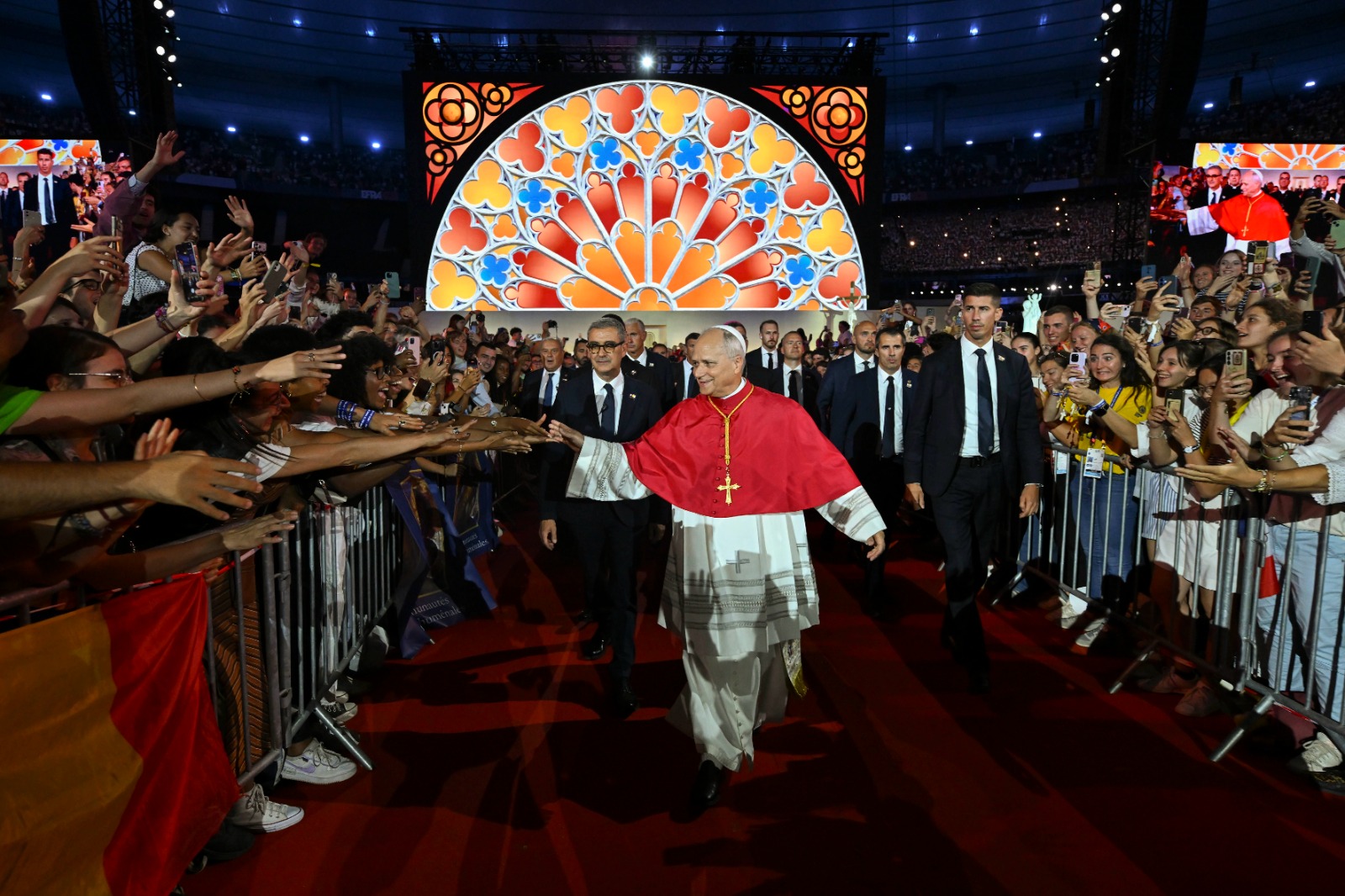
Recent episodes — Trump’s April 12 Truth Social attack labeling the first American-born Pope Leo XIV “WEAK on Crime” and “terrible for Foreign Policy,” followed by a now-deleted AI-generated image depicting Trump in a Christ-like healing pose — have intensified scrutiny.
These moments, combined with Trump’s unfiltered social media insults, raise a core question for the Republican Party: How does this style of administration affect the leading contenders to succeed him in 2028, and who emerges as the strongest option for the GOP if such behavior persists?
The Current landscape: Vance leads, Rubio closes
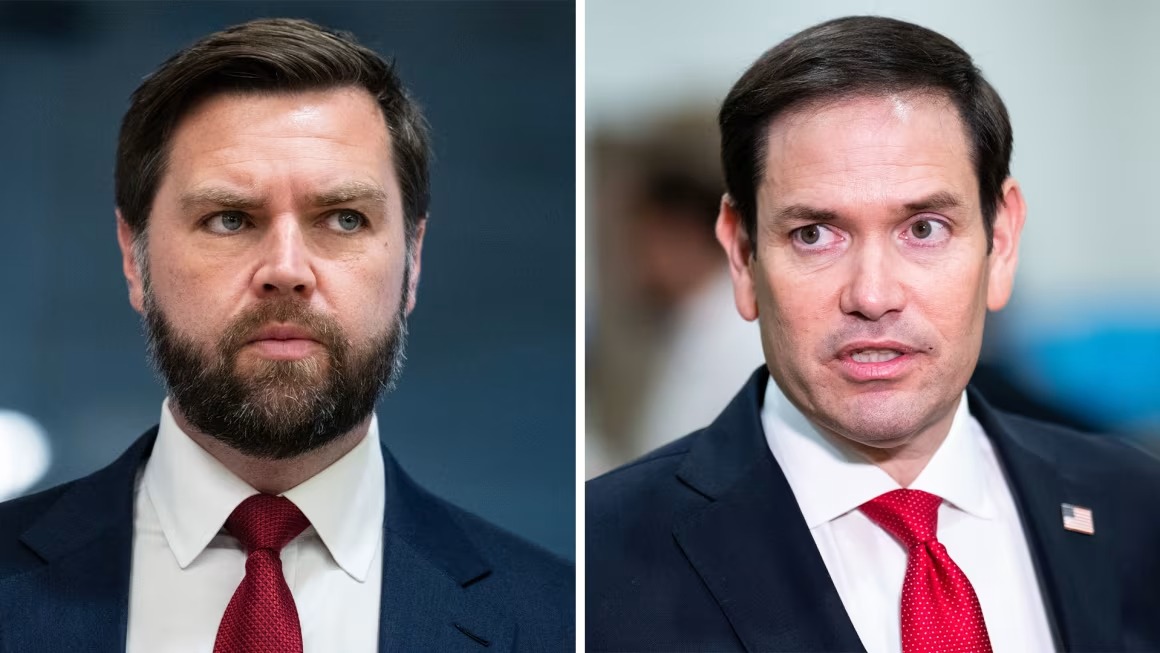
National polling aggregates and straw polls show JD Vance (Vice President) maintaining a clear but narrowing lead for the 2028 Republican nomination. He captured 53% in the March 2026 CPAC straw poll (down from 61% the prior year), while Marco Rubio (Secretary of State) surged to 35% (up from just 3%).
Broader surveys place Vance at 43–50% among GOP primary voters, with Rubio at 17–18% nationally but gaining momentum in head-to-head matchups and betting markets (Vance ~37%, Rubio climbing to 22–27%).
Other names — Ron DeSantis, Donald Trump Jr., Tucker Carlson — remain in single digits.
Trump himself has privately polled allies with the question “JD or Marco?”, signaling the race is effectively a two-man contest.
Effects on JD Vance an Rubio
Vance, the ideological successor to Trump’s “America First” movement, is most directly exposed to the president’s style. His recent travel to Hungary to rally for Orbán tied him visibly to a high-profile populist defeat, amplifying narratives of MAGA overreach abroad.
On Iran, Vance has maintained a more skeptical posture than the administration’s hawkish line, aligning with the base’s isolationist instincts but risking perceptions of internal friction.
The latest controversies hit closer to home for Vance, a Catholic convert. He has not publicly commented on Trump’s Pope Leo attacks or the Jesus image (nor has Rubio), despite earlier mild criticism of the pontiff as “too European” in a recent interview.
Reports of Pentagon officials pressuring the Vatican ambassador over Leo’s Iran critiques (which Vance said he would “look into”) further entangle him.
Trump’s religious self-imagery and papal feud risk alienating Catholic voters — a growing and electorally pivotal GOP bloc — and some evangelicals who view the imagery as blasphemous.
If Trump’s behavior continues, it could erode Vance’s structural advantage. The base remains fiercely loyal, but broader Republican and independent voters show signs of fatigue: Trump’s overall approval has slipped to the low 40s, with disapproval in the mid-50s amid the Iran conflict and economic concerns.
Vance’s close association may make him the default choice for continuity, yet it also burdens him with the “chaos tax” — the very traits that energize the core but limit general-election expansion.
Rubio, by contrast, has been somewhat insulated and even positioned to benefit. As Secretary of State and a key voice on Iran, he has projected discipline and hawkish competence — praising Trump’s “precision strikes” while avoiding the personal feuds. His visibility in diplomacy contrasts sharply with Trump’s late-night posts and institutional attacks.
Rubio’s Catholic faith adds another layer: like Vance, he has remained silent on the Pope controversy, but his prior meetings with Leo XIV and more measured foreign-policy tone allow him to appear as the steady hand.
Recent polling gains for Rubio (including in New Hampshire surveys) coincide with Trump’s more erratic moments and the Orban setback. Analysts note Rubio’s appeal to donors, establishment-leaning Republicans, and voters seeking less drama.
If Trump’s style persists — alienating religious conservatives, moderates, and suburbanites — Rubio’s profile as experienced yet loyal becomes a stronger asset. He offers MAGA continuity without the full Vance-style populism, potentially broadening the party’s coalition for 2028 and beyond.
Ultimately, the outcome hinges less on any single Pope feud or deleted image and more on how the Iran situation resolves, economic conditions, and Trump’s eventual endorsement. Trump’s aging (nearing 80) and the party’s awareness that 2028 cannot simply rerun 2024 make succession inevitable.
His style has not destroyed Vance or Rubio’s viability — it has instead sharpened the choice: purity (Vance) versus pragmatic breadth (Rubio). However, the situation remains fluid — events of the next 24–48 hours on the papal front or Strait of Hormuz could shift optics further. But the data point to a tightening contest where Trump’s approach is accelerating, rather than halting, the transition to new leadership.

Comments (0)
No comments yet. Be the first!
Leave a Comment
Your comment will be reviewed before publishing.