
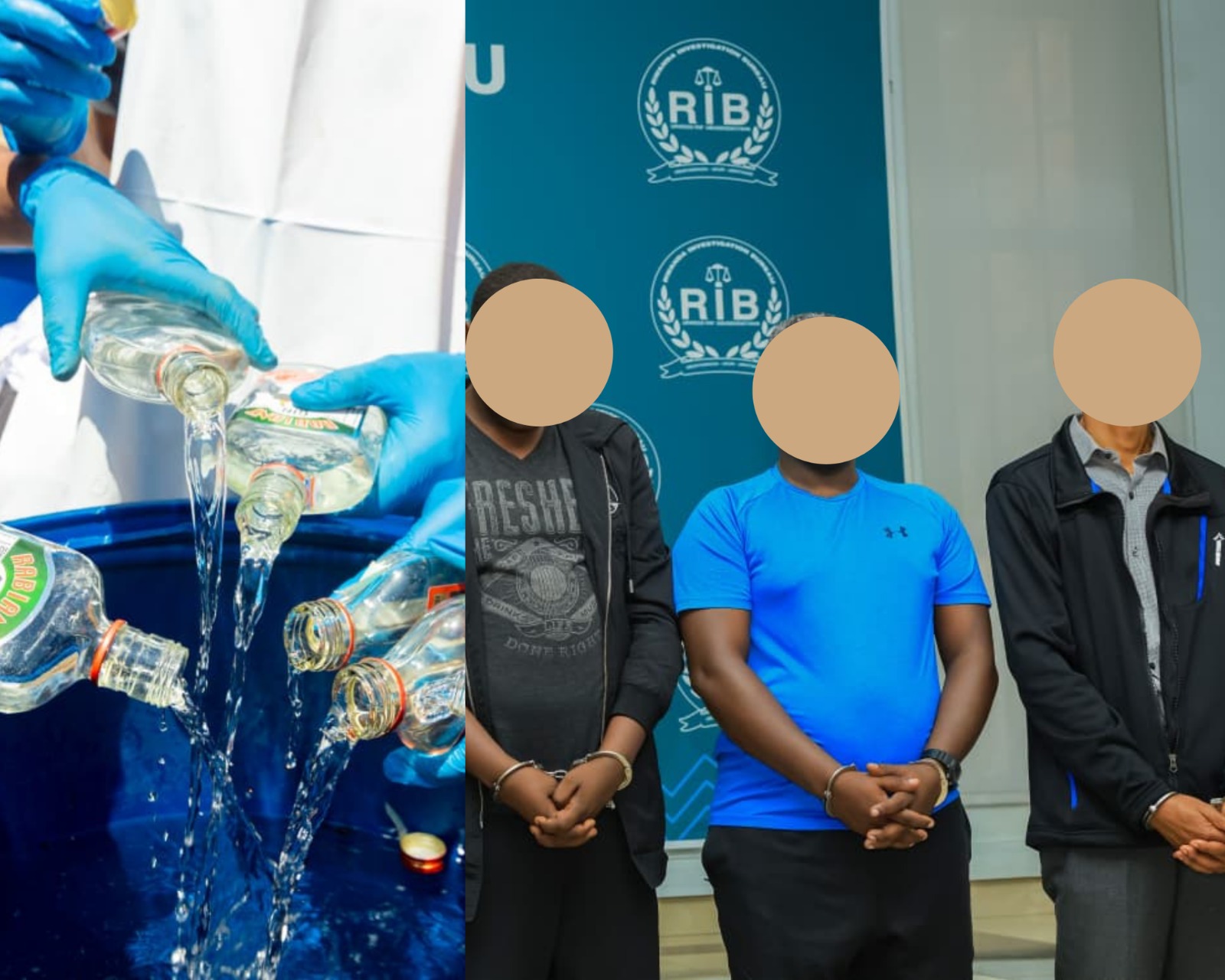
More than 140 companies have been closed, hundreds of alcohol brands recalled, and over 50 imported brands temporarily suspended. At least 104 people have been arrested in the wider illicit-alcohol investigation, while 97 case files have been forwarded for prosecution since July 20.
Then, on August 13, the investigation reached the institutions responsible for regulating the sector.
Rwanda FDA Director General Emile Bienvenu was arrested alongside 17 other public officials, all linked to the Rwanda Food and Drugs Authority (FDA), the Rwanda Standards Board, and local government. They are being investigated over alleged offences connected to the production, certification, and distribution of illicit or non-compliant alcohol. These are allegations, not convictions.
This is no longer simply an alcohol story. It is about public health, regulation, institutional accountability, social behaviour, and the direction of Rwanda's development.
The numbers are a warning
Health Minister Dr. Sabin Nsanzimana reported more than 50 deaths, over 100 cases of vision loss, and more than 500 people seeking medical treatment after consuming suspected toxic or substandard alcoholic beverages. Authorities have identified dangerous substances, including methanol and other unauthorised chemicals, in some products.
The response has been equally serious. Authorities have seized alcoholic products worth over Rwf2.62 billion. The investigation has generated 97 case files sent to prosecution, while the wider operation has resulted in 104 arrests.
The crackdown is also being linked by police to broader public behaviour. Reported fighting and assault cases fell from 345 between July 15-31 to 188 between August 1-12. If that trend continues, Rwanda is confronting something beyond poisonous drinks - it is confronting alcohol as part of a wider social-order problem.
Rwanda's real resource is its people
There is a deeper reason this matters. Rwanda does not possess vast oil reserves or enormous mineral wealth. One of its greatest long-term assets is human capital.
Every person blinded by toxic alcohol is not only a health tragedy but a loss of human capacity. Every young person trapped in alcohol or drug abuse represents lost education, productivity, and opportunity. Every family damaged by addiction carries an economic and social cost.
Protecting citizens is therefore not merely a moral responsibility - it is development policy.
Rwanda has already recognised the problem. Its Tunywe Less campaign followed data showing alcohol consumption rising from 41% in 2013 to 48% in 2022. The current crackdown is therefore not a sudden discovery. It is an escalation.
But can government solve a social problem alone?
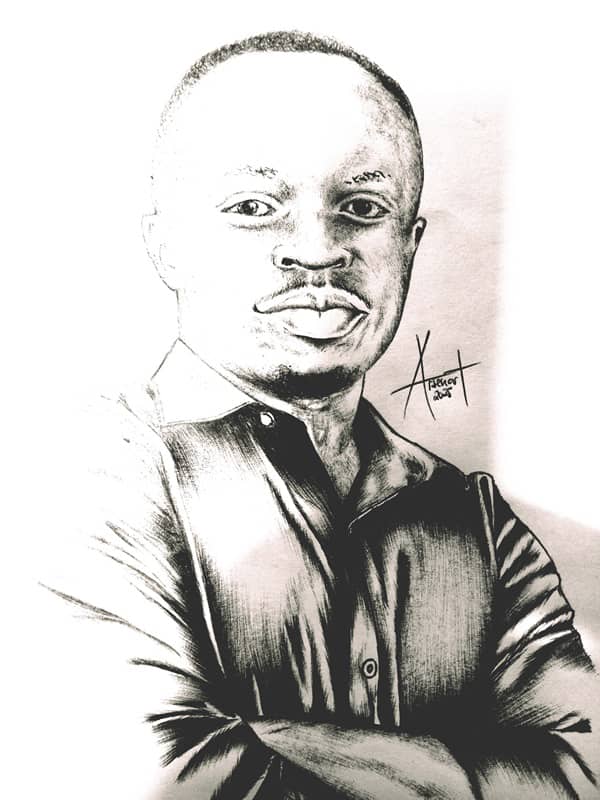
According to Dr Joseph Nkurunziza Ryarasa, Executive Director and co-founder of Never Again Rwanda, the state has a responsibility to protect citizens. But government cannot raise every child, discipline every young person, repair every family, or rebuild every community.
"Families, schools, religious institutions, civil society, the media, and the community as a whole matter," Dr Ryarasa posted on X.
If every social problem becomes something citizens wait for a minister, police officer, or government agency to solve, society itself becomes weaker. A strong state needs a strong society alongside it.
The responsibility of raising children cannot be completely outsourced to schools or government. Character, discipline, integrity, and responsibility begin at home and are reinforced by communities.
The economic question
There is another question Rwanda should now confront: What are its economic policies incentivising?
The country is investing heavily in agriculture, agro-processing, and employment. Yet Rwanda must ask why investment can become so attractive in alcohol production while processing maize, cassava, potatoes, fruits, vegetables, and dairy remains difficult.
This is not an argument against a legitimate, regulated alcohol industry. It is an argument about policy priorities. If Rwanda can create conditions that support a large alcoholic-products market, it should also be able to create equally attractive conditions for industries that buy farmers' produce, reduce post-harvest losses, create rural jobs, strengthen food security, and add value locally.
Rwanda's next challenge
The most successful outcome would not be thousands of arrests. It would be a situation where Rwanda no longer needs emergency crackdowns because the system prevents dangerous products from reaching consumers in the first place.
That requires better surveillance, laboratory capacity, product traceability, transparent licensing, stronger inspection systems, community reporting, and sustained public education.
It also requires communication - and this is where the media becomes essential. The media should not simply report that another factory has been closed or another person arrested. It should investigate the system: Who licensed the business? Who inspected it? Who supplied the raw materials? Where did the product travel? Who distributed it? Why did consumers buy it? What happened to previous offenders? What are the economic consequences for legitimate producers? What policies could make healthier industries more competitive?
These are the questions that turn journalism from information distribution into public accountability.
Rwanda has spent three decades building a stronger state. The next challenge may be building an equally strong society. Because a country can close hundreds of companies, arrest hundreds of people, and seize billions worth of products - but if the underlying failures of responsibility remain, another crisis will eventually emerge.
So, is Rwanda resetting? There is no official government declaration of a "national reset." But the phrase captures something important about this moment. Rwanda is confronting unsafe alcohol, youth behaviour, drug abuse, discipline, family responsibility, institutional accountability, and regulatory failures - all at once.
Perhaps the real reset is not about alcohol. It is about responsibility.

Comments (0)
No comments yet. Be the first!
Leave a Comment
Your comment will be reviewed before publishing.