

Yet the question that haunts every corruption fighter is not whether the institutions exist, but whether they speak to one another.
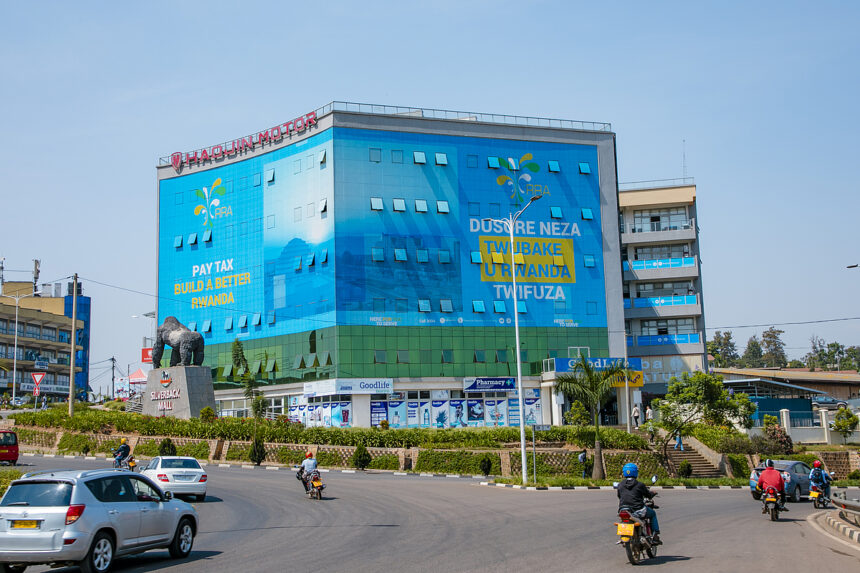
Consider the recent allegations that shook the nation. According to Taarifa, Prosecutors claim a network involving dozens of individuals and numerous companies fraudulently claimed approximately Frw 5.606 billion in VAT refunds.
The scheme allegedly involved fictitious companies, fraudulent EBM invoices, stolen identities, complex bank transactions, company ownership changes, and the subsequent movement of money into property and businesses.
These are allegations before the courts, and the accused remain presumed innocent. But the mechanism itself raises a troubling question: what happens when corruption stops looking like a bribe and starts looking like a financial enterprise?
This is precisely how Singapore once found itself.
In the 1950s and 60s, corruption was deeply embedded in Singaporean society. Police officers took bribes. Government contracts were awarded through connections. The system was broken.
But Singapore's leaders understood something profound: corruption is not merely a moral failing - it is an economic problem that destroys nations.
They built the Corrupt Practices Investigation Bureau (CPIB) not as another bureaucracy, but as an independent, powerful, and technologically equipped institution that could follow money across borders, through shell companies, and into the hidden corners of the financial system.
Singapore's success rests on a simple philosophy which is “make corruption a terrible business decision.”
If theft is profitable, people will attempt it. If detection is difficult, they will take the risk. But if the state can detect suspicious activity, freeze proceeds, prosecute participants, and recover stolen wealth, the economic logic changes entirely.
The potential corrupt official begins to consider: "I could lose my freedom, my reputation, and the money itself." That is deterrence.
Singapore didn't just arrest corrupt officials - it made corruption unprofitable. Assets were seized. Benefits were confiscated. Families who benefited from stolen wealth found themselves stripped of ill-gotten gains.
The message was unmistakable: corruption doesn't pay. Today, Singapore stands as one of the world's least corrupt nations, proving that even deeply entrenched corruption can be systematically demolished.
Rwanda's opportunity
Rwanda already possesses a crucial piece of this puzzle: the Financial Intelligence Centre (FIC). The FIC receives and analyses suspicious transaction reports from banks, insurers, accountants, and real estate professionals.
But financial intelligence alone cannot dismantle a corruption network. Investigators must transform intelligence into evidence. Prosecutors must build cases. Courts must determine guilt. And asset recovery mechanisms must bring the money back.
Imagine, instead, a secure national system where legally authorized investigators can connect information across databases. A company appears legitimate in one registry. A bank transaction seems ordinary in another. A property purchase looks unremarkable on its own. But connect them - company to VAT refund, to bank account, to related company, to official, to relative, to property, to foreign transfer - and an entirely different picture emerges.
This is how the five billion francs must be pursued. Not just as a criminal case, but as a financial trail. Where did the money go? Which companies received it? Which properties were purchased? Which relatives benefited? The system should follow every branch until every franc is accounted for or legally impossible to recover.
If Rwanda wants to become Africa's Singapore, it must build what I would describe through six pillars: Prevent, detect, investigate, prosecute, recover, reform.
Singapore's legal framework provides mechanisms for restraint and confiscation of criminal benefits, allowing authorities to prevent assets from simply disappearing. This produces an extremely powerful principle: the state does not merely punish the crime - it attacks the economic benefit of the crime.
The final test
Imagine a corrupt official considering stealing RWF 5 billion. Under a weak system, the calculation might be: "If I succeed, I become rich. If caught, I may go to prison."
Under a truly advanced system like Singapore's, the calculation becomes "The transaction may be detected. My network may be mapped. My assets may be traced. The money may be frozen. Those helping me hide it may be investigated. Foreign assets may be pursued. The criminal proceeds may be confiscated."
At that point, corruption stops looking like a lucrative opportunity. It becomes a terrible business decision.
Rwanda need not simply copy Singapore. It can learn from Singapore while building something uniquely Rwandan - a connected integrity system where corruption becomes difficult to commit, easy to detect, dangerous to conceal, and impossible to profit from.

Comments (0)
No comments yet. Be the first!
Leave a Comment
Your comment will be reviewed before publishing.